Saturday, August 30, 2008
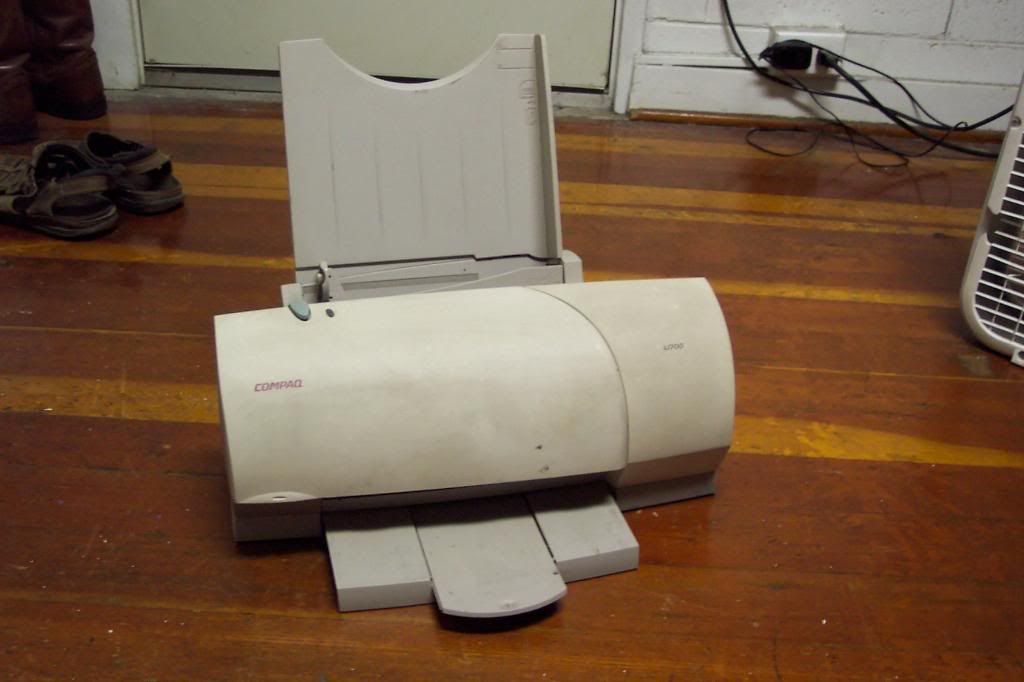
Compaq IJ700 printer
I generally don't like things that are asymmetrical just for the sake of being so. And in the context of this blog, appliances that are designed with asymmetry as part of the aesthetic. Obviously, there are some things that have to be asymmetrical, like a sewing machine, and you can only put the control panel one one side of something, but I'm talking about non-functional stuff. Part of it is just personal preference, and part of it is because symmetric pieces are easier for me to find uses for.
This Compaq (incidentally, I had forgotten they even made printers) is very subtle about not being symmetrical, until you examine individual parts. The tray at the top has a guide on just one side, the green button is a really wonky shape, and there are several other examples not evident in this picture.
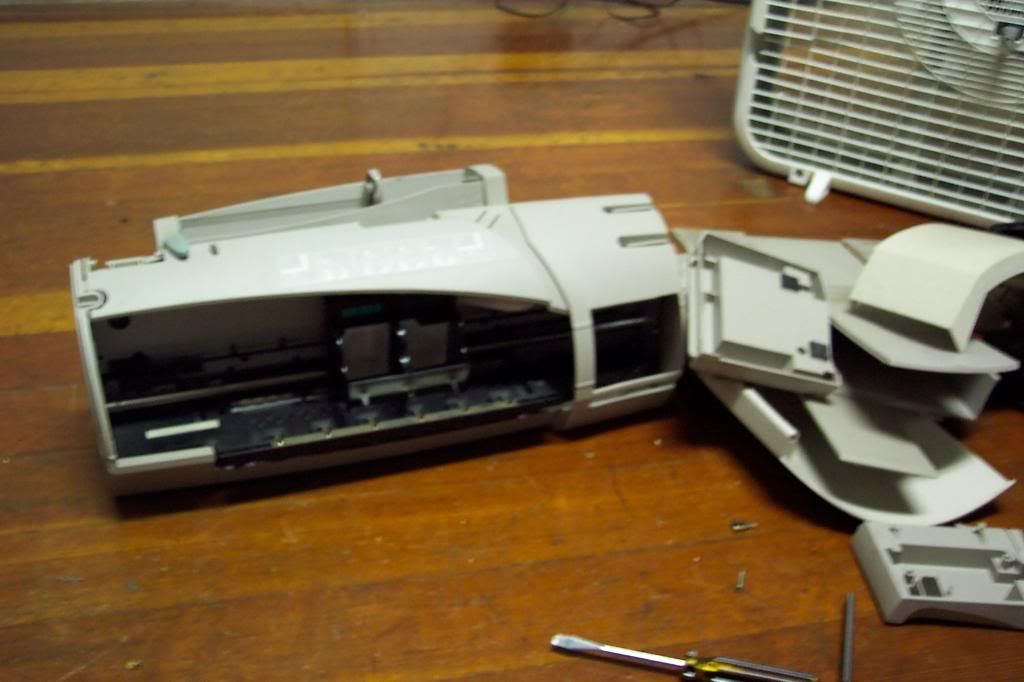
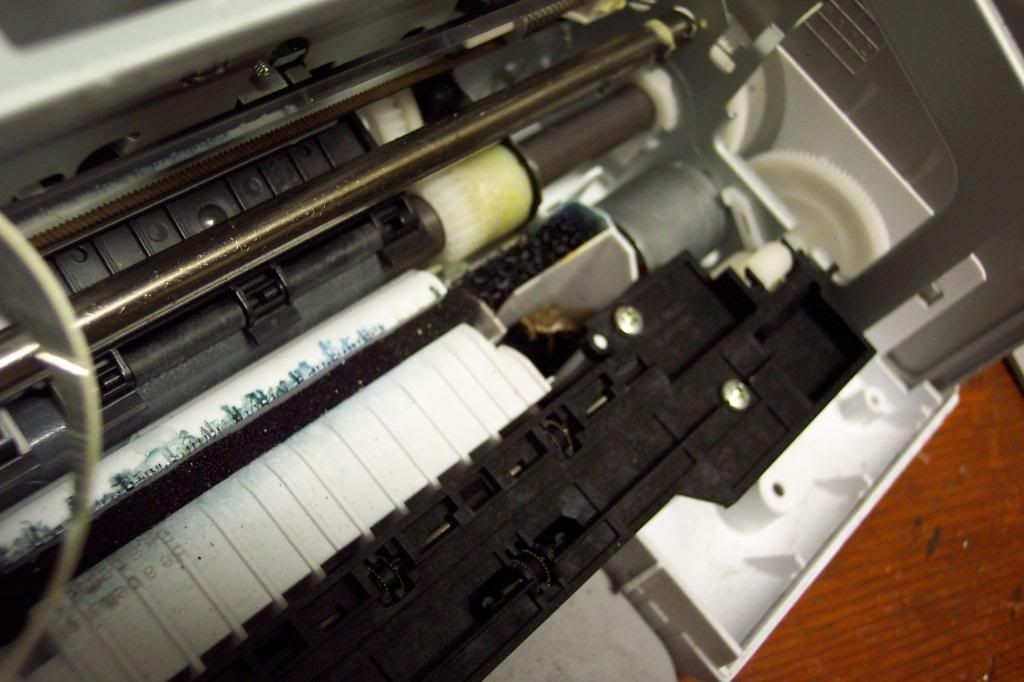
This is another issue I had with this printer: all the extraneous plastic that was on top of the 'core' case.
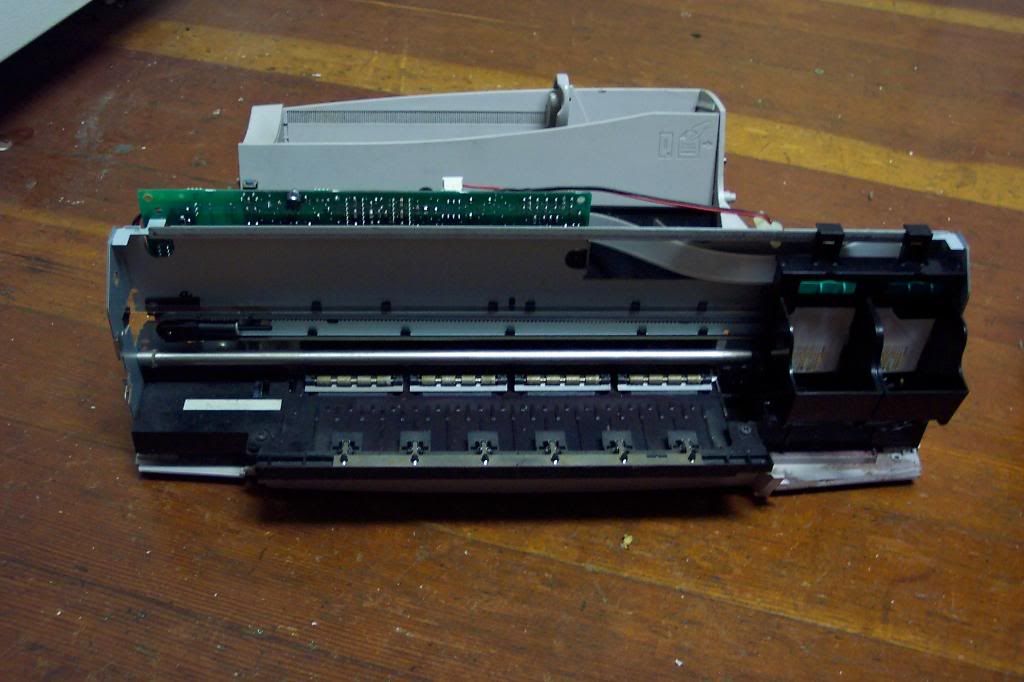
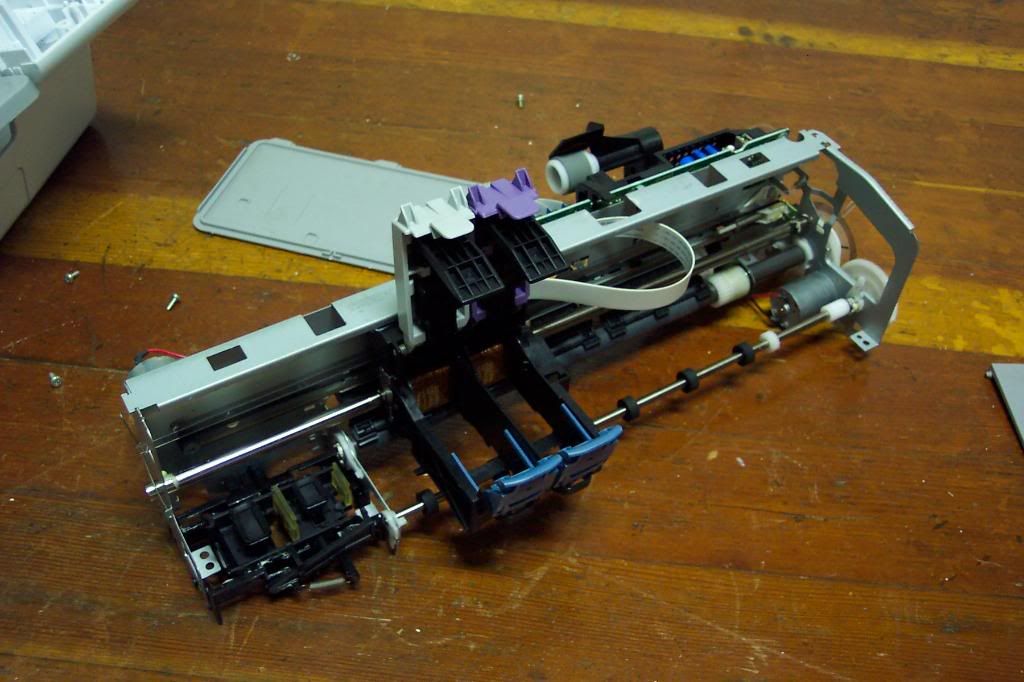
Look at that little thing, compared to how big it was with the plastic still on.
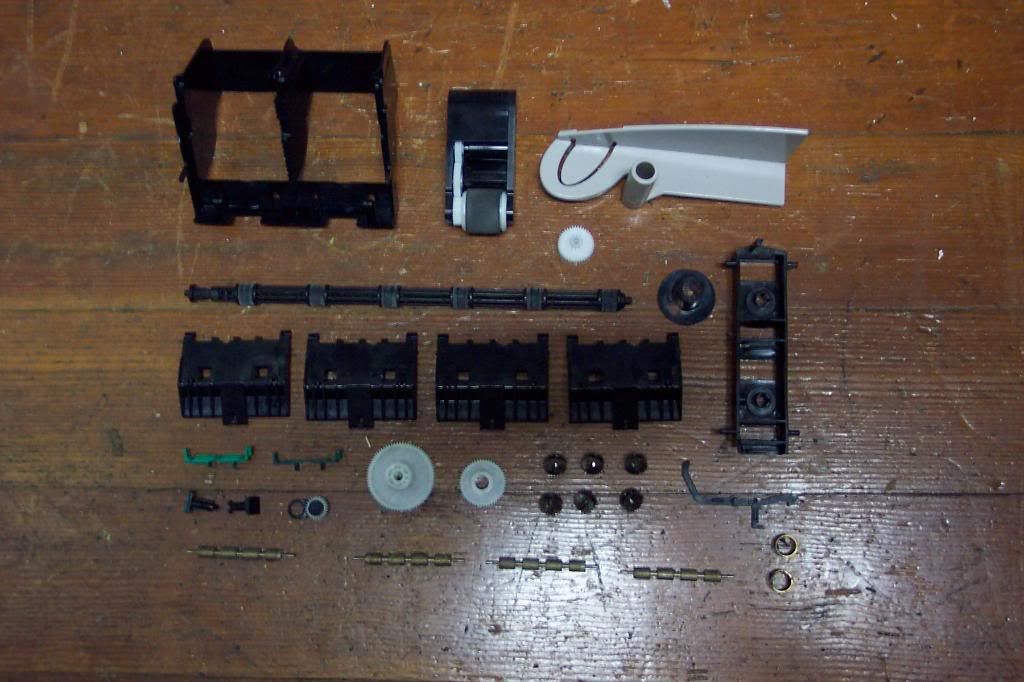
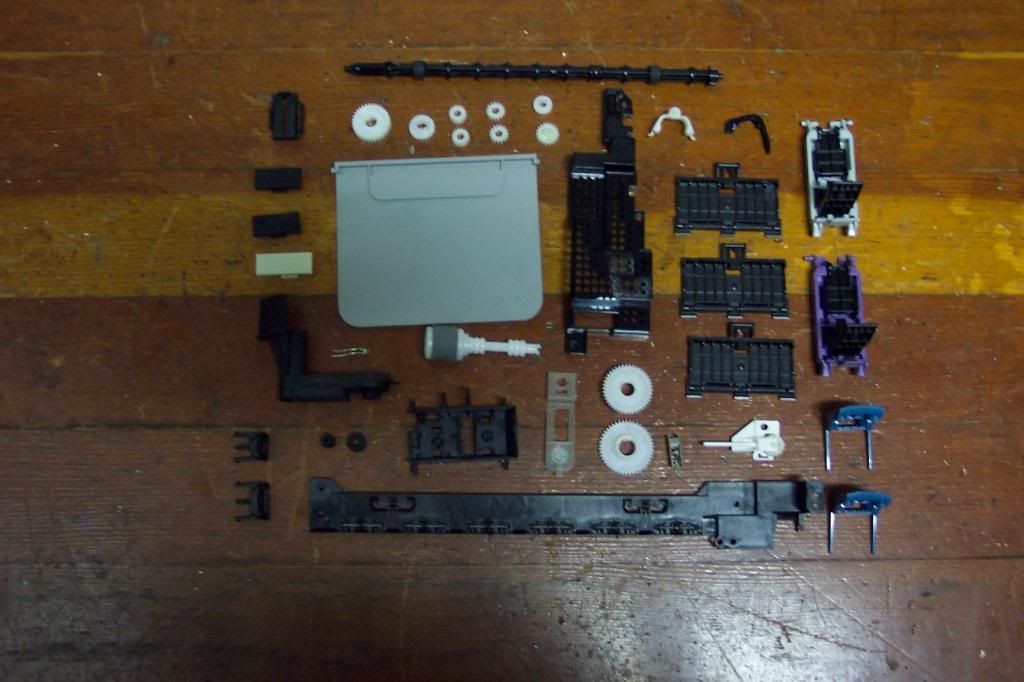
I got a decent amount of parts. Not many gears, though; most of them didn't want to come out.
Saturday, August 23, 2008
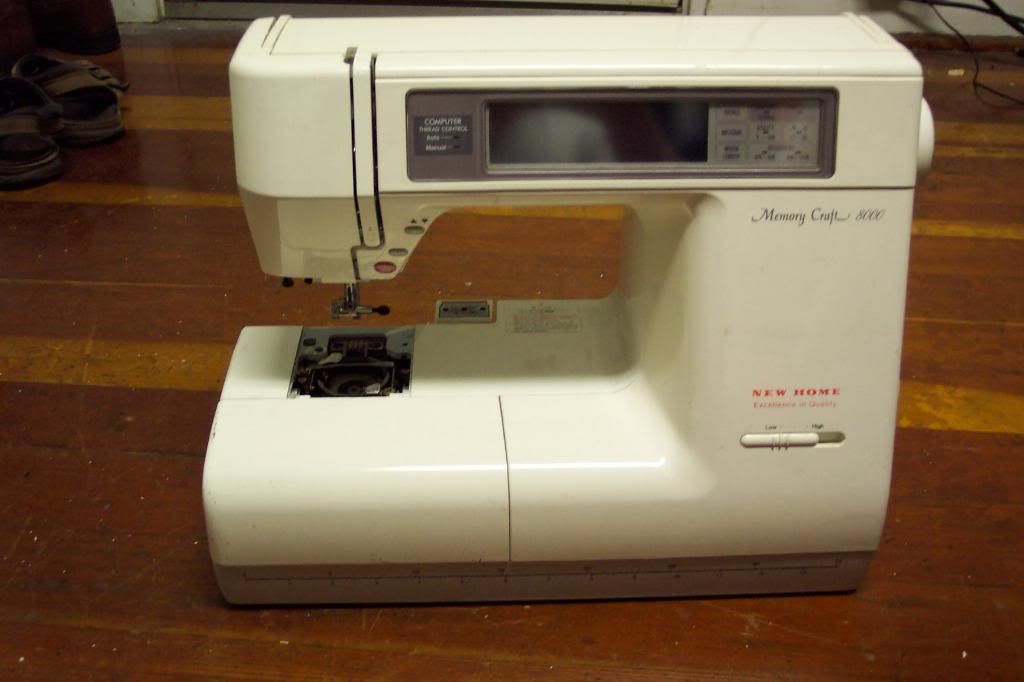
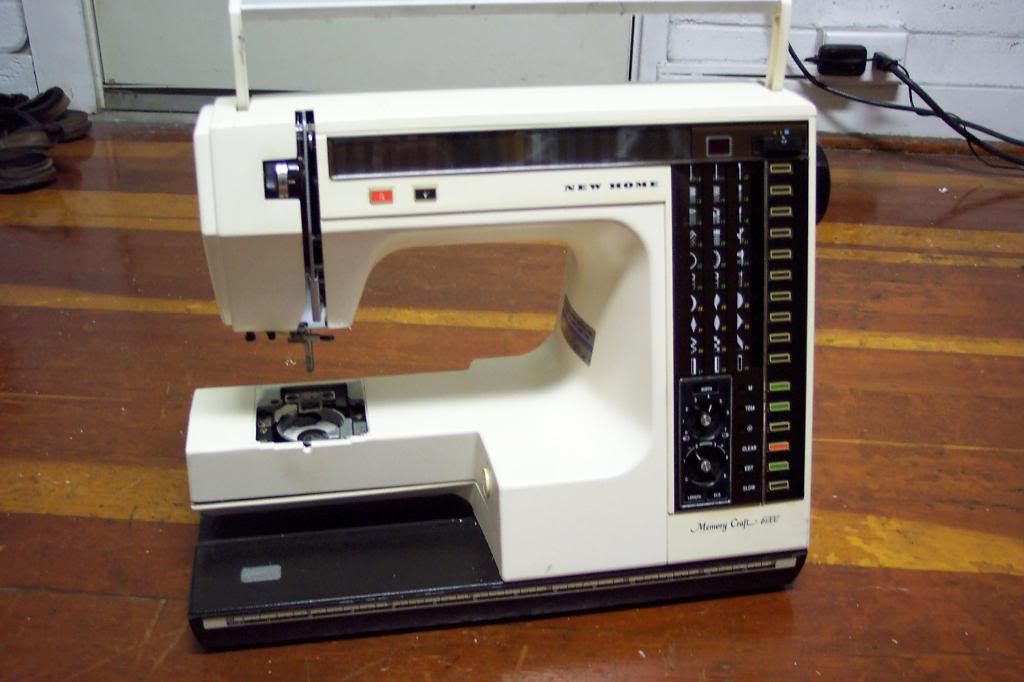
New Home Memory Craft 8000 sewing machine
It's back to sewing machines again for this week. This machine is interesting both in how high-tech it is, as well as the fact that it still sort of worked. See, when I sat down to take it apart, I noticed that the outlet for the cord was the same size as one I already had, so I decided to plug it in just to see if anything would happen. Well, it actually turned on. I was kind of surprised. I don't think it 'worked' exactly, but the settings appeared to change when I pressed the buttons. I thought twice about taking it apart, but decided to since obviously whatever was wrong with it was either not repairable or would cost more to fix than the unit's worth.
I have previously taken the 6000 and 7000 series Memory Crafts apart; the 8000 is much sleeker, mainly due to the lack of separate buttons for all the settings. Instead, it has a touchscreen, which is pretty snazzy for a home sewing machine.
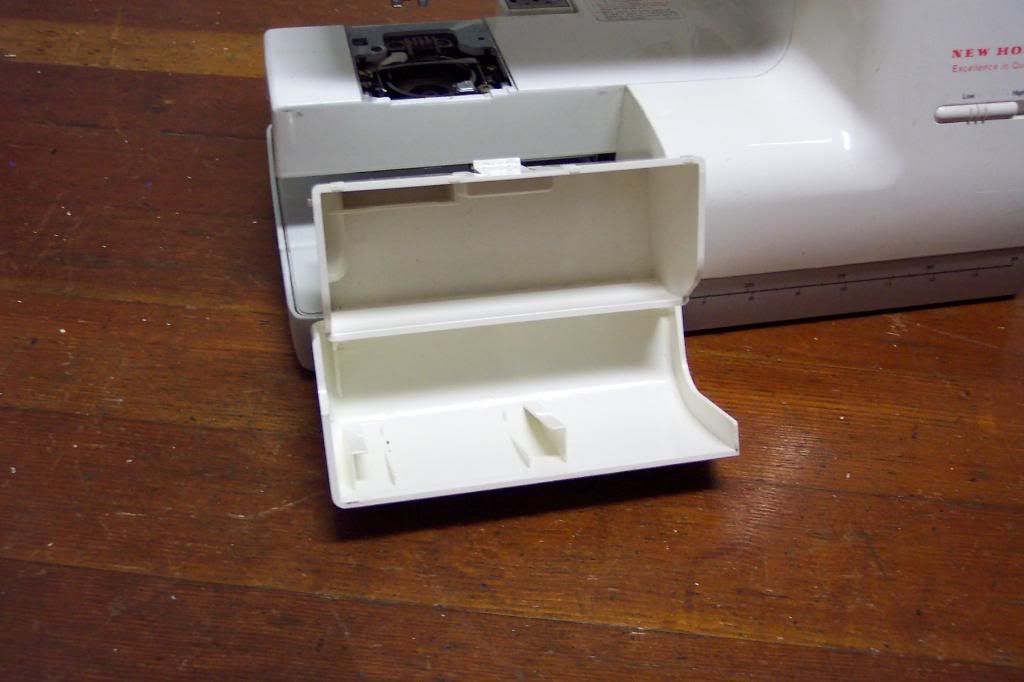
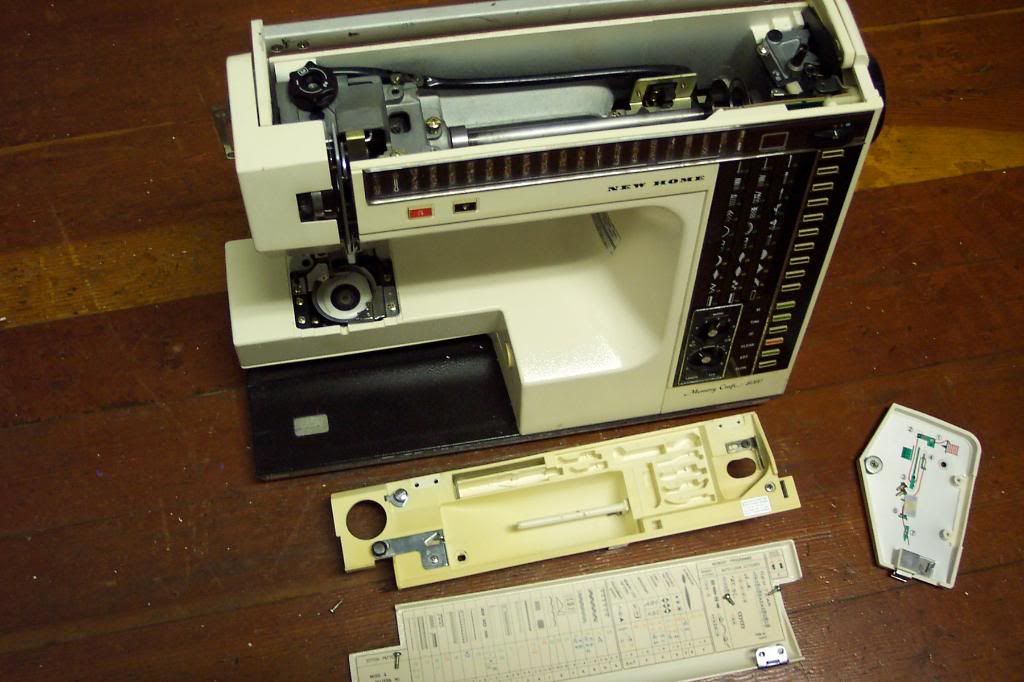
This little compartment slides right off. I decided to keep it because one can never have too many little containers.
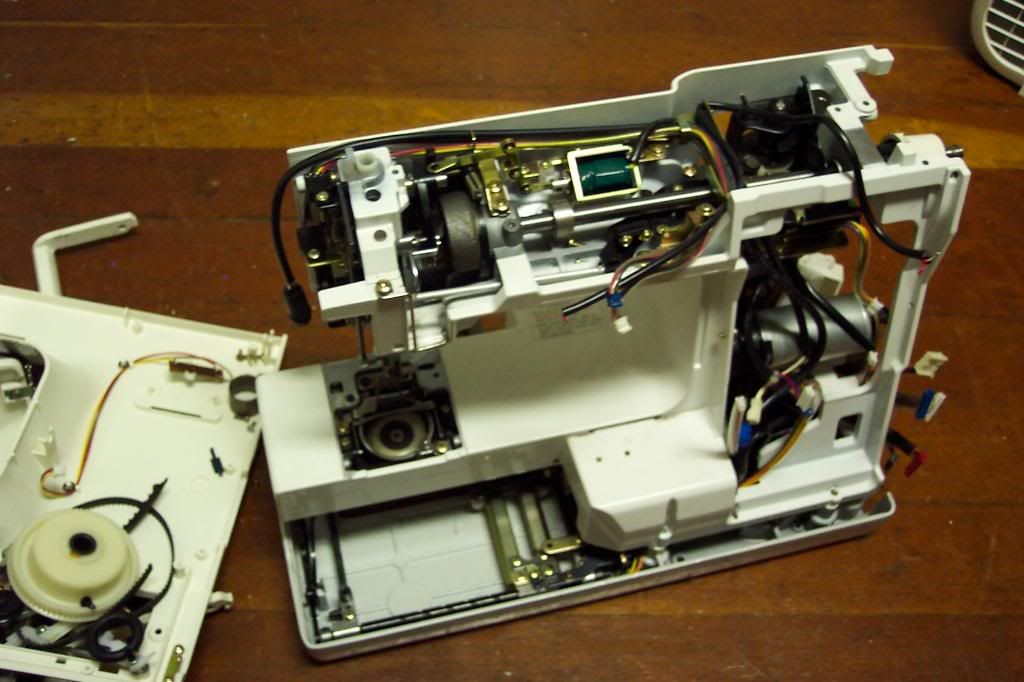
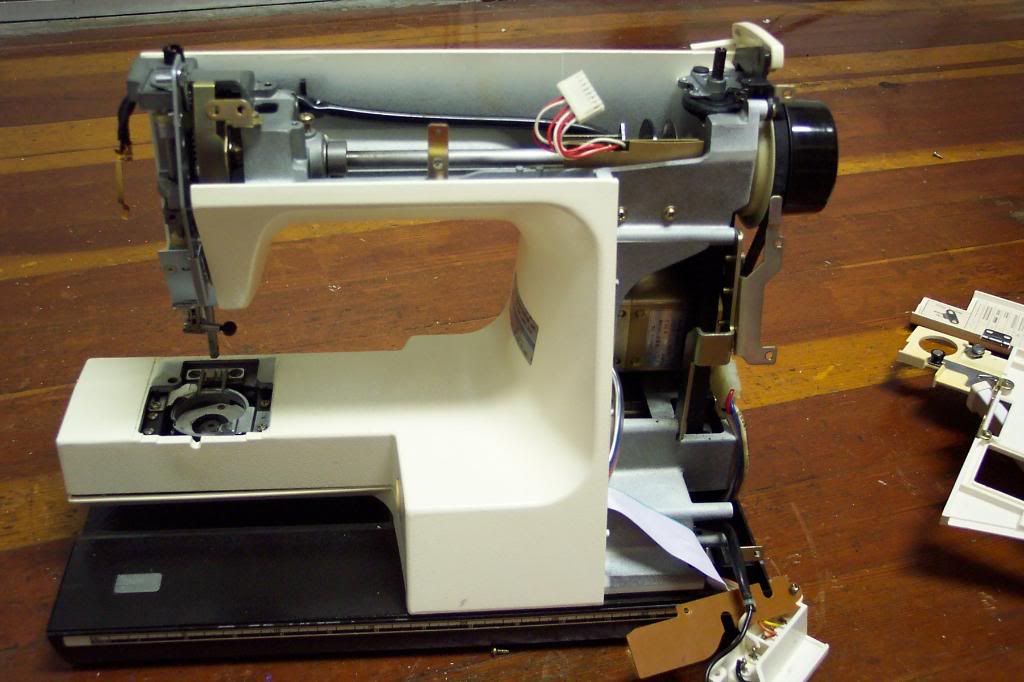
Sewing machine with the body panels removed, exposing a lot of tightly packed components.
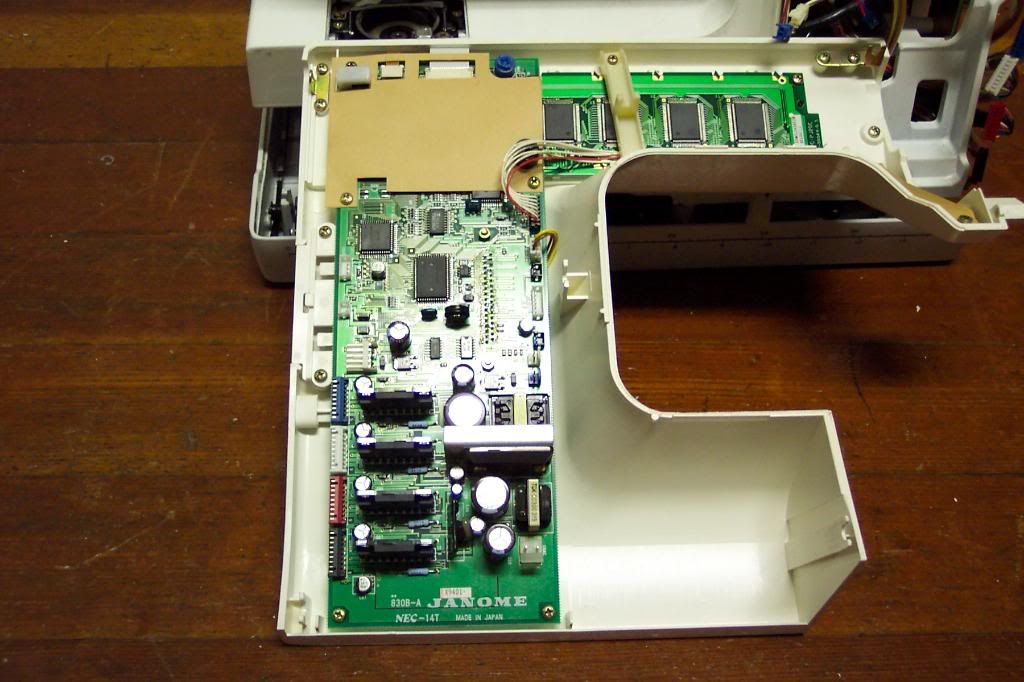
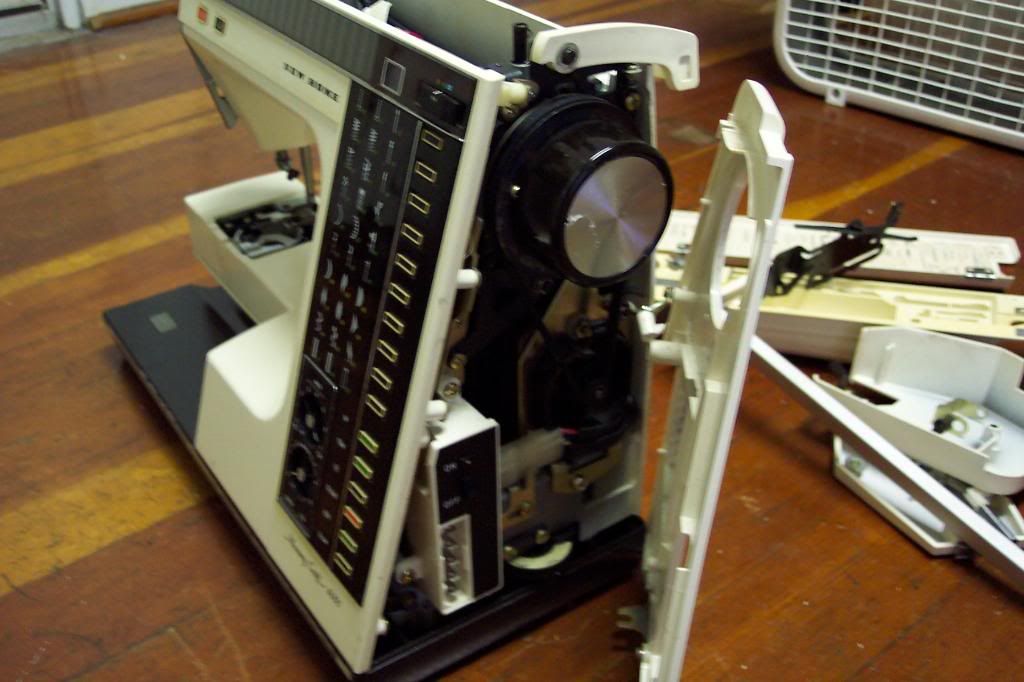
The back side of the control panel.

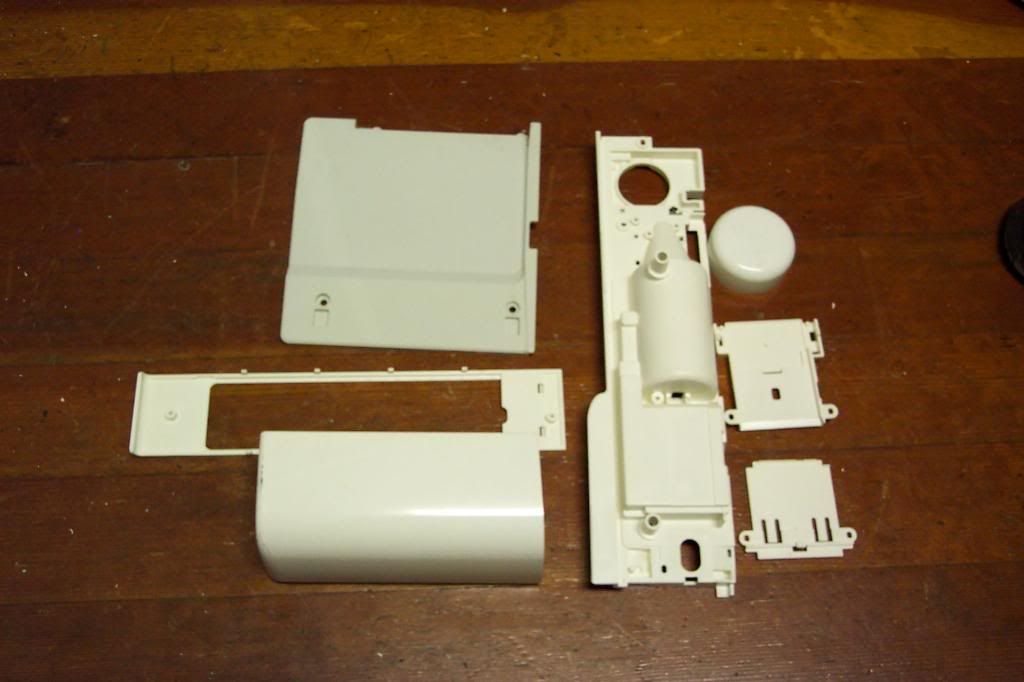
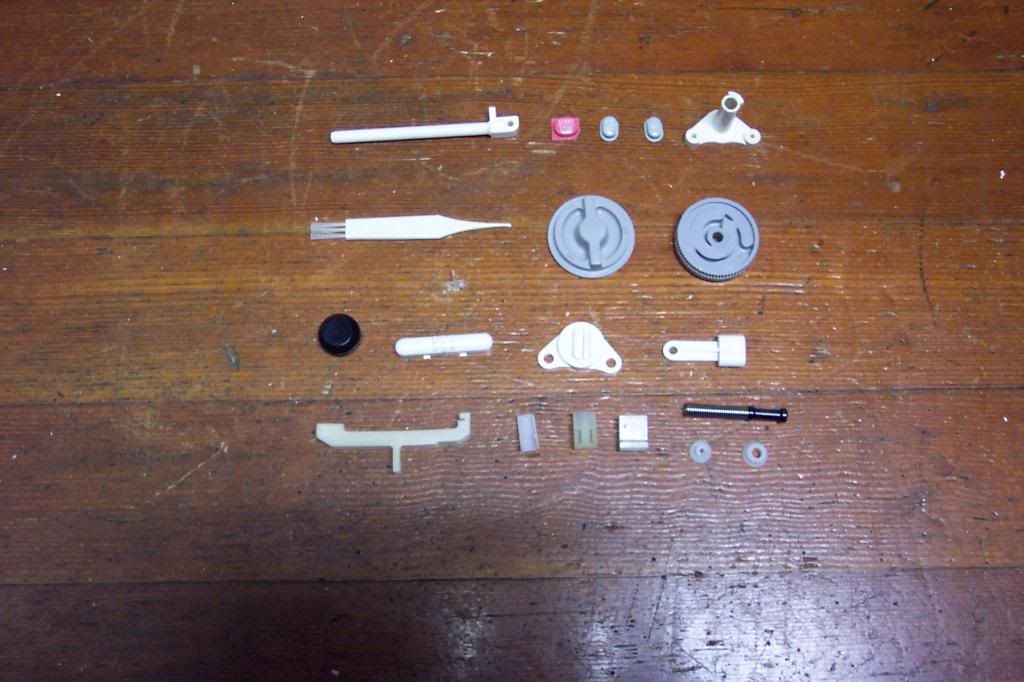
Strictly speaking, there wasn't a large number of parts I could pull from this, but some of them were pretty big. That's not much of a consolation, though.
Saturday, August 16, 2008
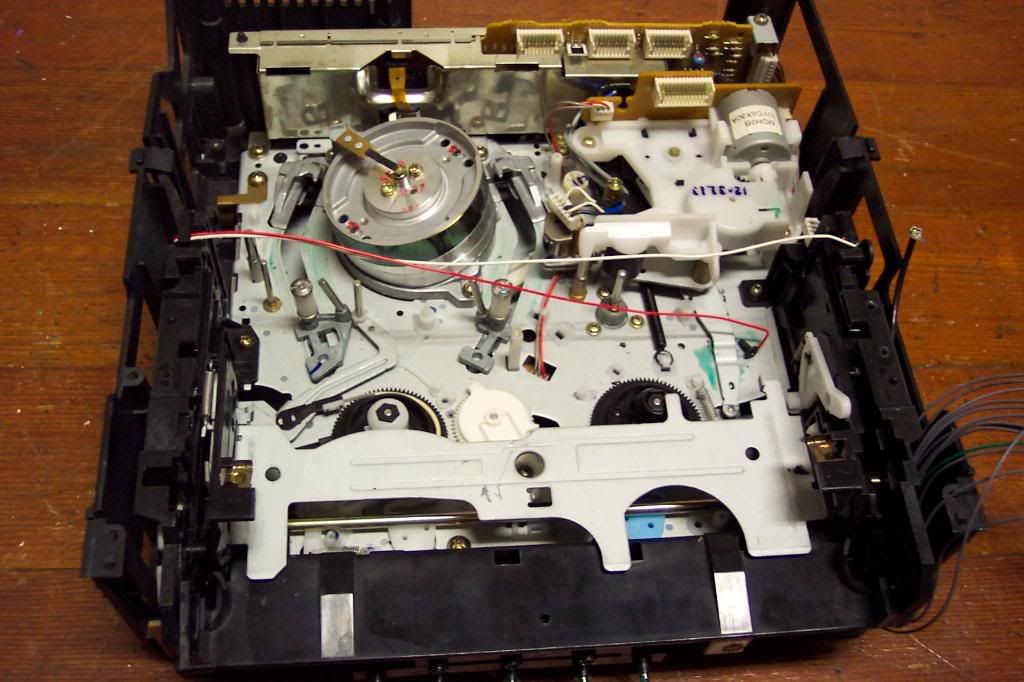
Audiovox VCR
VCRs are one of those devices that you would think has a lot more removable parts than it does. And simple tear-downs often make for boring entries, but here we go anyway...
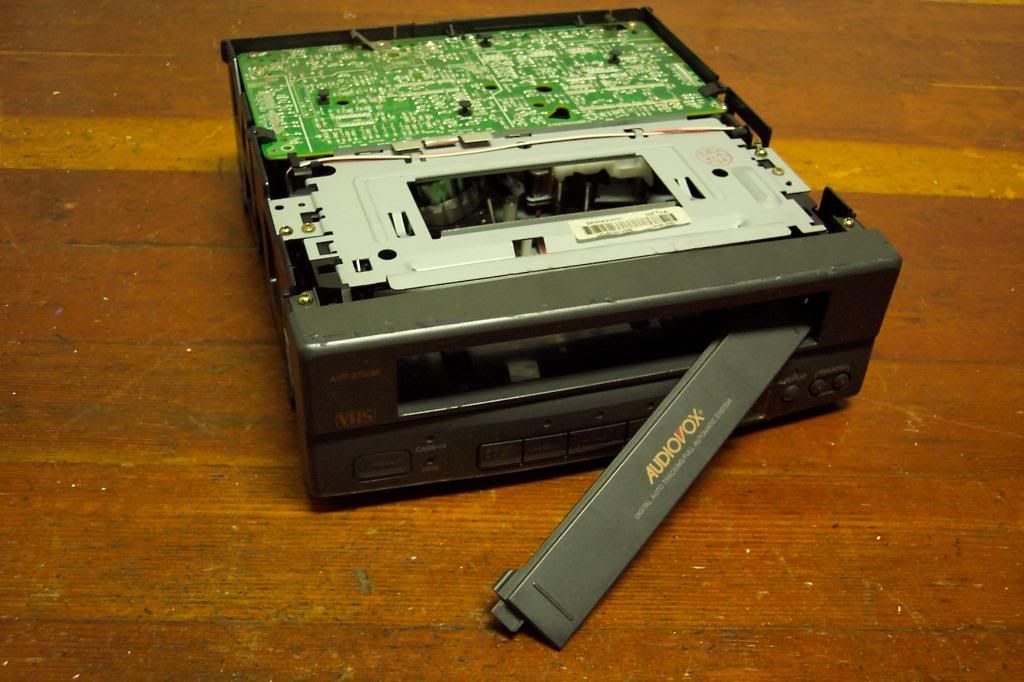
As I picked this up on the side of the road, the top fell off, and I didn't bother to pick it back up, so that's why there's exposed circuitry. The cassette flap thing came off in transit and fell into the inside of the VCR. I'm wondering if these aren't symptoms of why it got thrown out in the first place. I'll also note that this VCR seems to be somewhat unusual in that the circuit board is at the top rather than at the bottom.
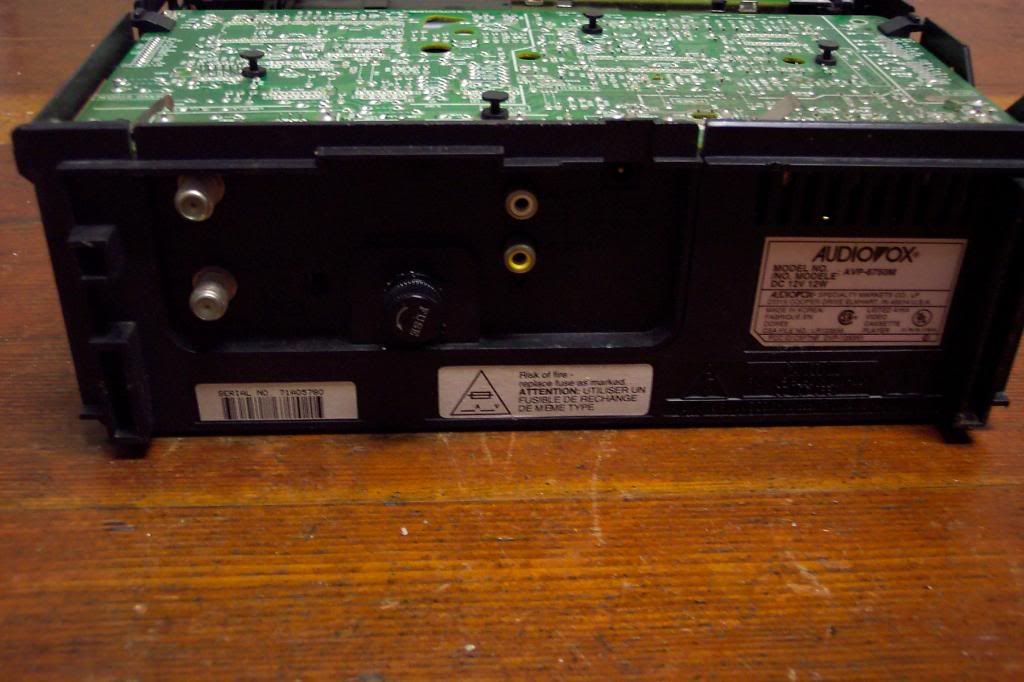
Another unusual feature is the fuse access thing on the back. I've never seen one on a VCR before, and certainly not on a relatively new one. User serviceable parts are something I associate with older electronics.
The VCR with the circuit board and top of the cassette carriage removed.
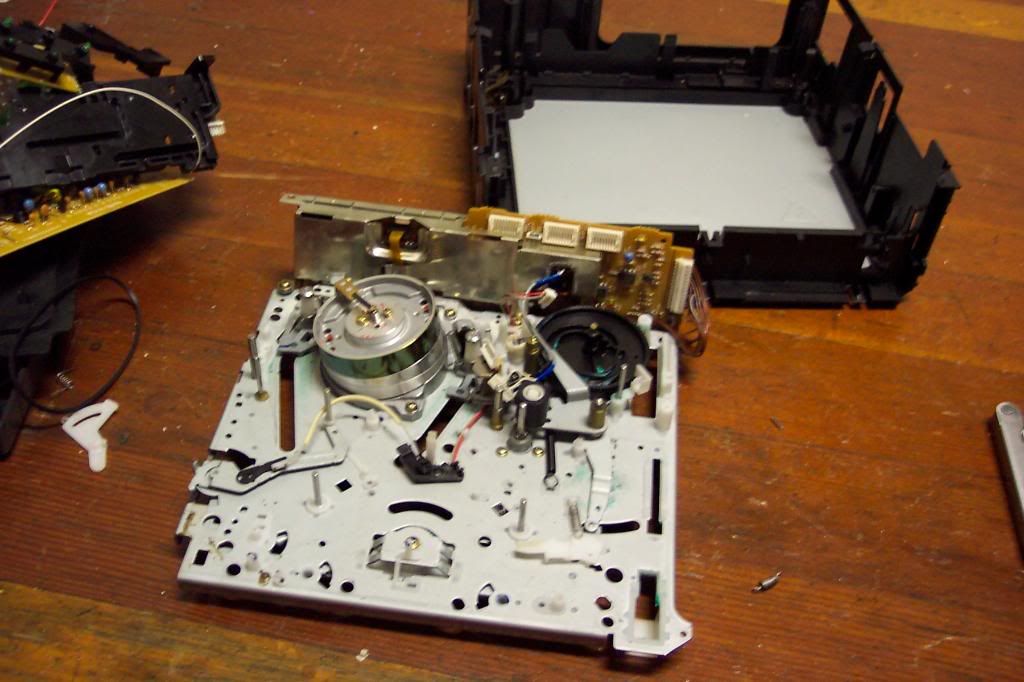
And the chassis totally removed.
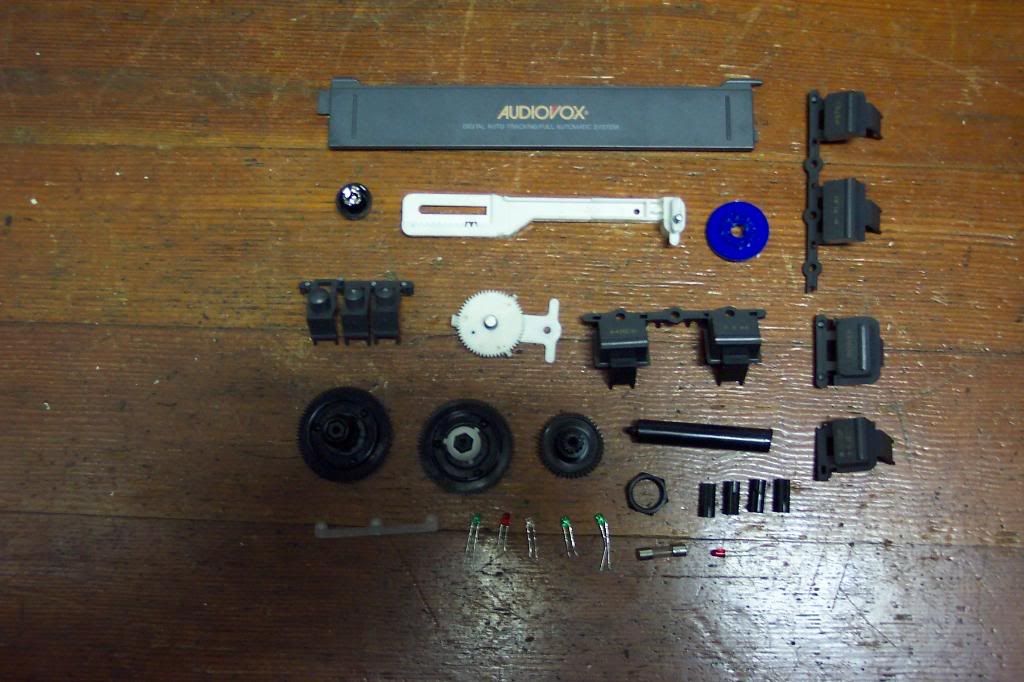
Not a bad trophy pile, but not a great one. Then again, I'm running out of room to put all this crap, so maybe small parts piles aren't such a bad thing.
Saturday, August 9, 2008
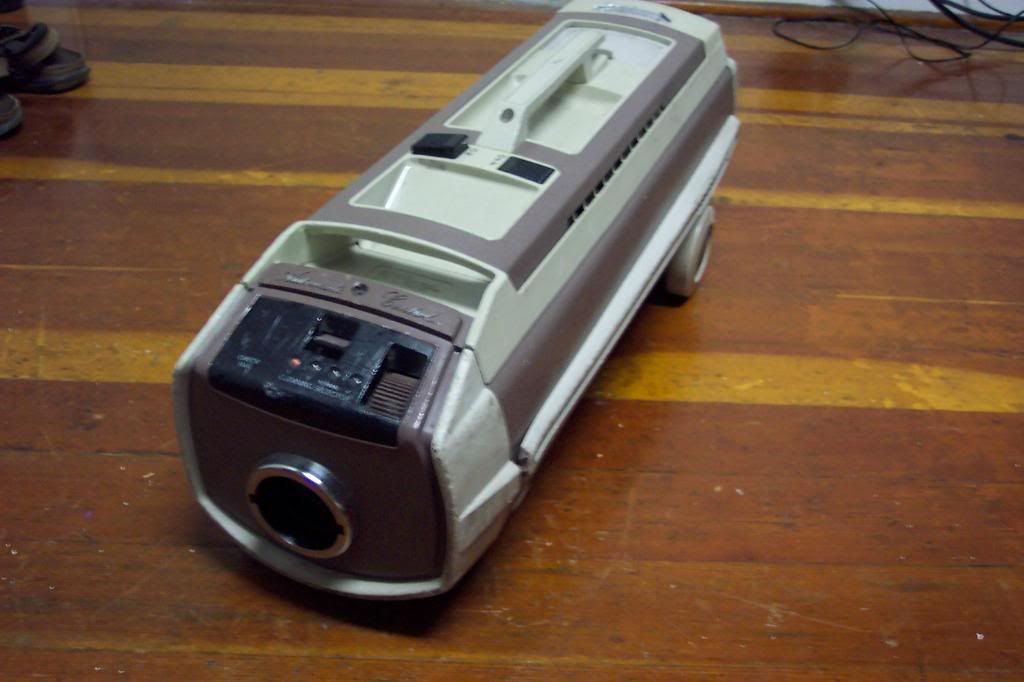
Electrolux Marquis vacuum cleaner
Since I added the tag feature on the blog a couple of weeks ago, I noticed it had been a while since I had posted a vacuum cleaner. As it happens, I have a vacuum cleaner in the backlog, so I might as well write an entry about it now. Besides, it breaks up the recent glut of printers and sewing machines.
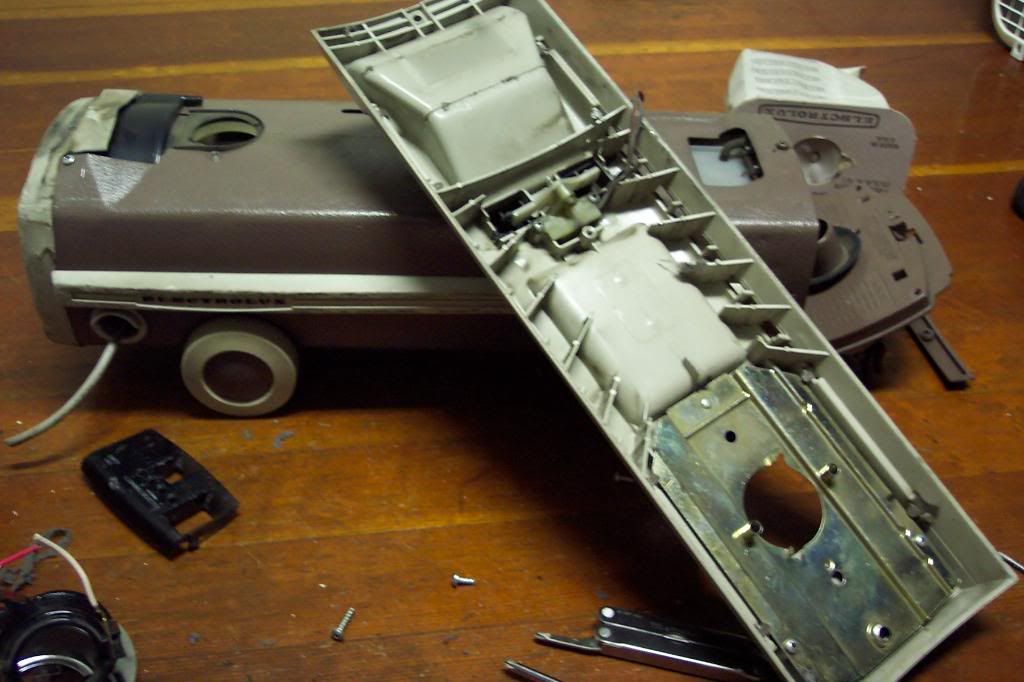
I think this is a Marquis, but I'm not 100% sure. There aren't very many good pictures on the Internet of Electroluxes from its era (late 1980s), but the couple I did find that claim to be Marquis look pretty much just like this one. This particular specimen has plenty of scuff marks and scratches, so I'm guessing it had a long and storied career of cleaning up messes before finally giving up the ghost. Also, this is apparently one of the last models that had a metal body, before the switched over to plastic.
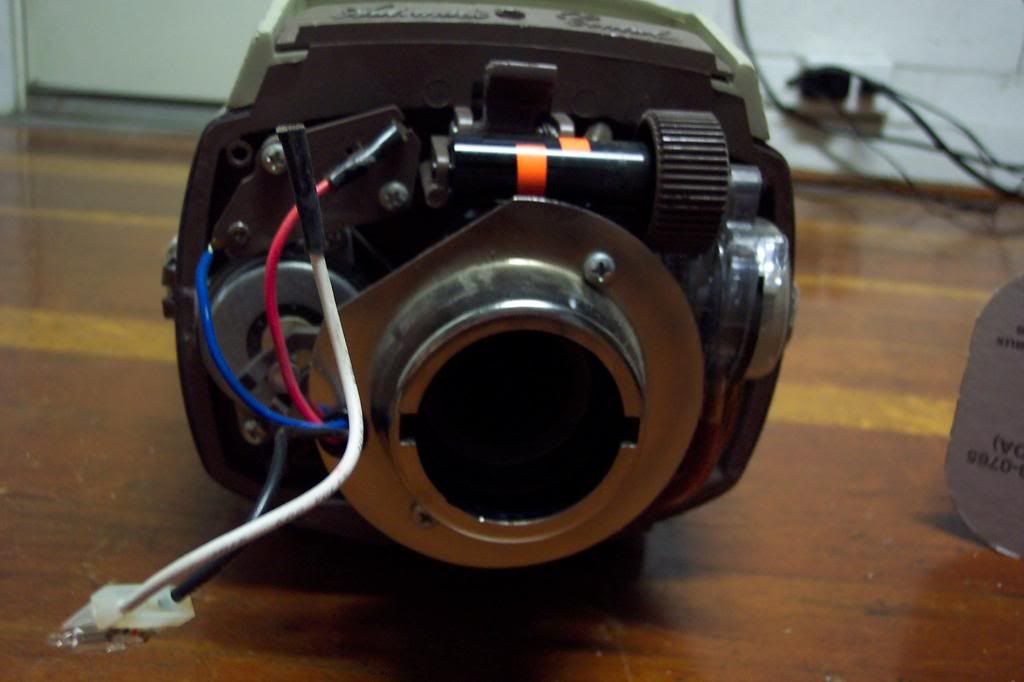
The front of the vacuum, with the housing removed. The control system looks fairly similar in principle to the older Silverado Deluxe I took apart last year.
Here you can see the see-saw-like on/off switch mechanism.
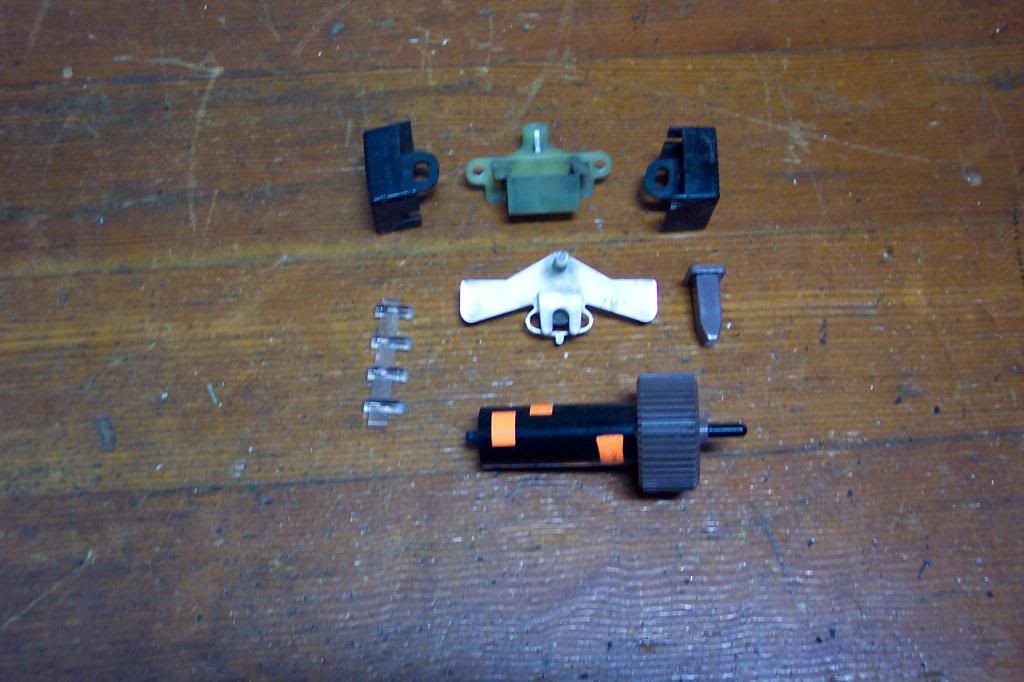
Not much to show for my efforts, but I do like the roller/knob parts on Electroluxes. I think they remind me of the wheels off some toy I used to have.
Saturday, August 2, 2008
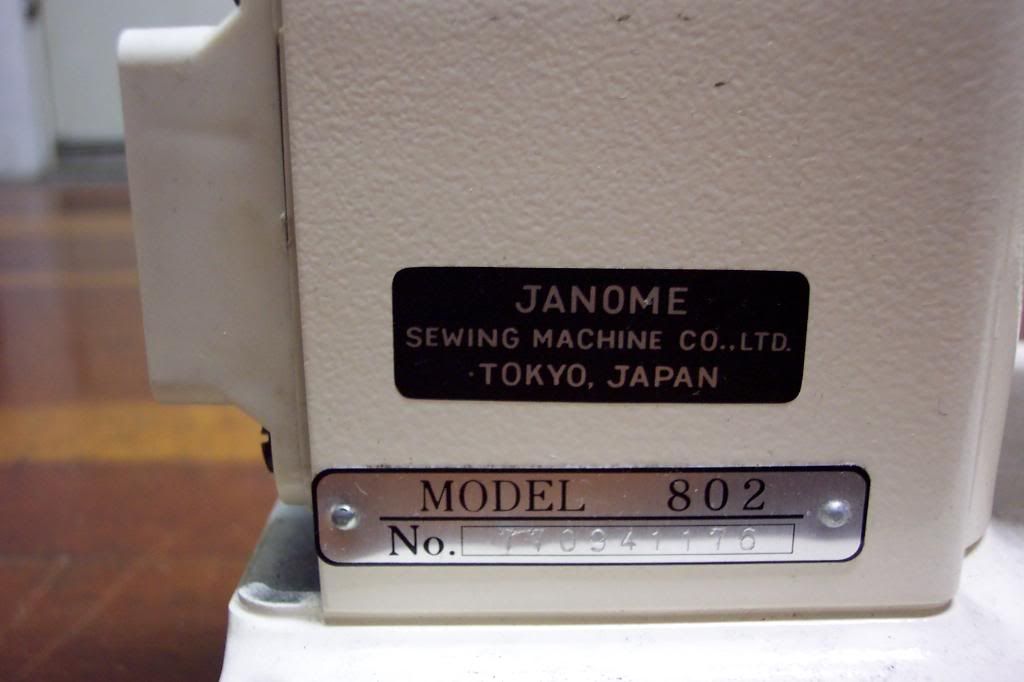
Janome Model 802 sewing machine
I'm going to the movies in a few minutes, so I'm just going to bang out a relatively short post about a relatively short tear-down.
Last year, I saw and grabbed at least two of these, or similar models, but that was before I started doing this blog. This is the first one I've seen in quite a long time.
I'm not sure of the vintage on this, but the metal construction and 'Made in Japan' sticker (as opposed to being made in China by a Japanese company) lead me to believe it's at least 25 years old. But I could be completely wrong, since I didn't do any research to verify this.
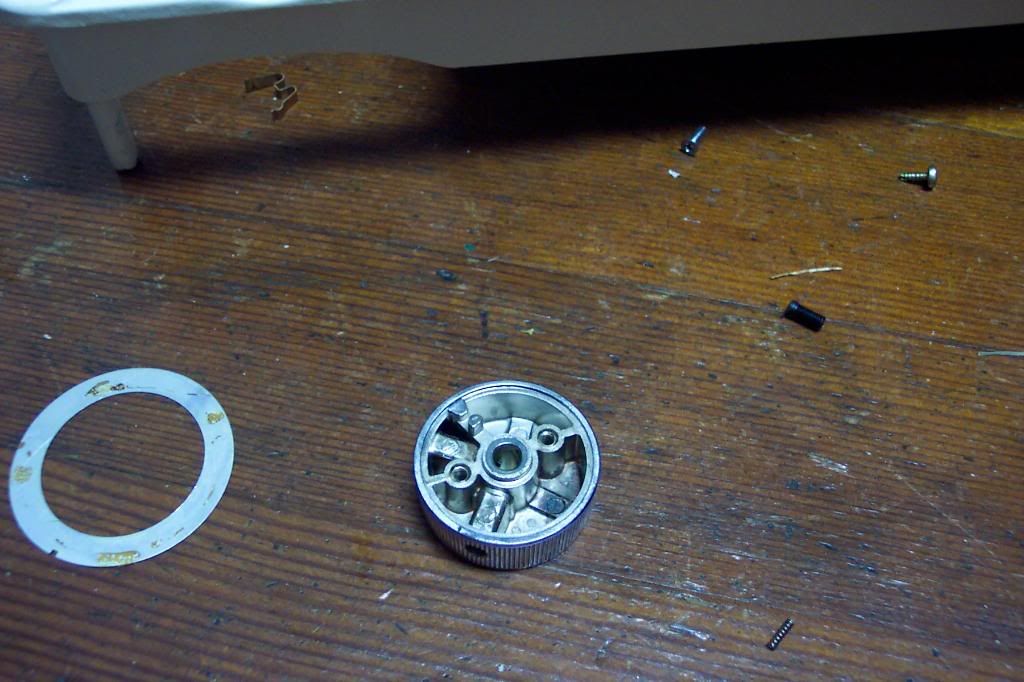
Those are metal knobs. I didn't bother to keep them, but they were unusual enough that I felt I should mention them.
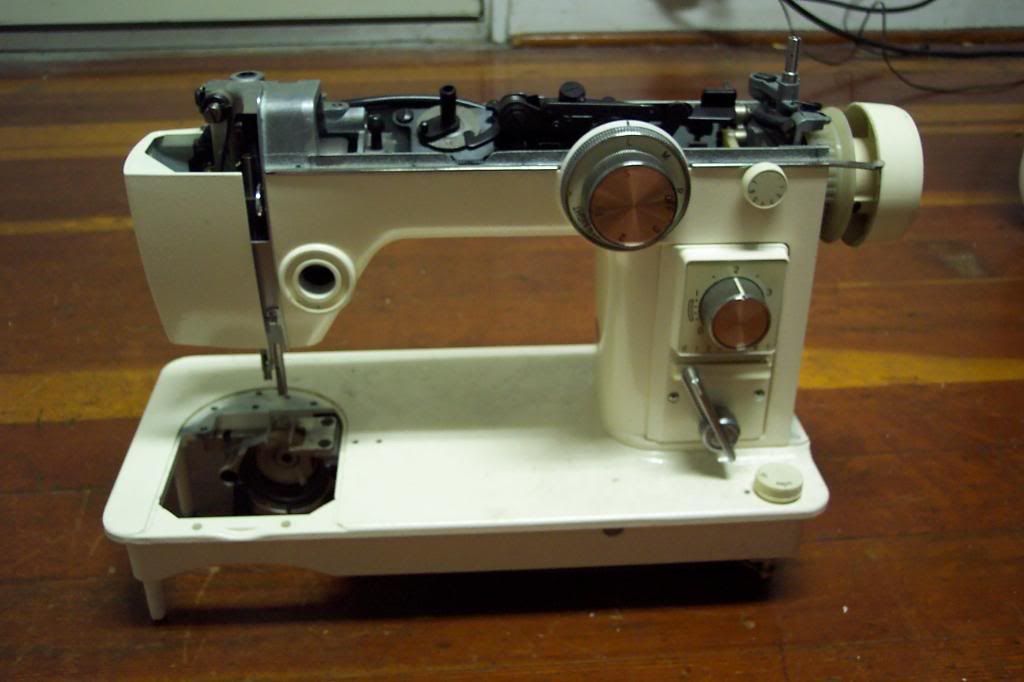
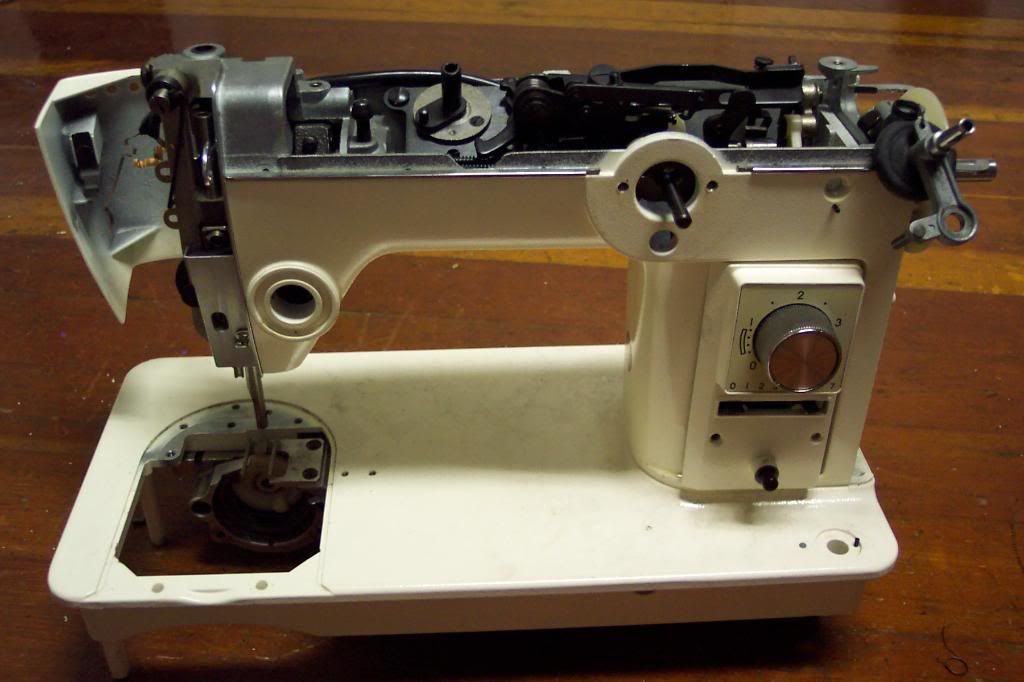
This picture of the sewing machine after I got done with looks a lot like the first picture up there. That is, of course, because most of the parts wouldn't come off. You know the drill.
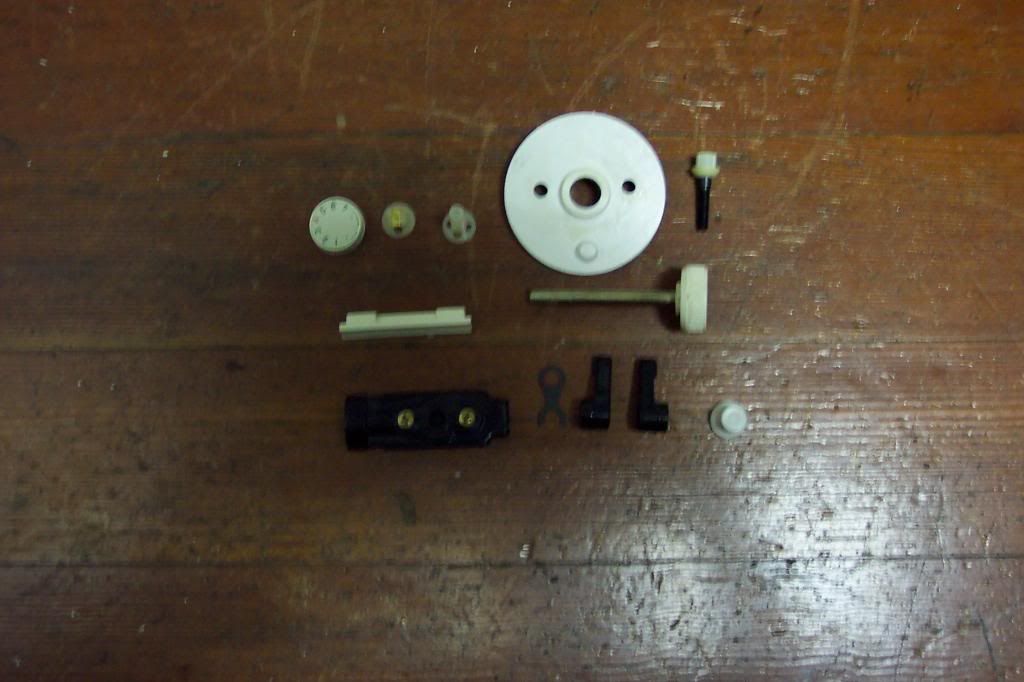
A blurry picture of a lousy trophy pile. Oh well.
Saturday, July 26, 2008
Lexmark Z1300 printer
This is the first time I've taken anything apart that uses, for lack of a better term, an iPod-esque design. By that, of course, I mean clean minimalism and rounded right angles, as opposed to the quasi-organic looking and sometimes busy lines used on a lot of electronics over the past fifteen or so years. I have to imagine though that this won't be the last, since a lot of manufacturers seem to be adopting that kind of design language.
The first thing I noticed when I snagged this was how light it was. And by light, I mean cheap. Most desktop printers of this size have some heft to them, but this one almost felt like an empty case. I know that plastic construction does not automatically equal low quality, but this is a fairly new printer and already in the trash. So yeah...
The top of the body shell came off pretty easily. There doesn't look like much in the way of parts, but there were actually a decent amount.
See that brown thing in the middle of the picture? That's a roach. A live one, in fact, and I got this far in taking the printer apart before I saw it. Taking this picture was immediately followed by taking the printer outside and shaking the roach out (squashing it would just have made a mess).
The printer, sans body case.
Decent parts haul, and fortunately not a roach turd to be found.
Saturday, July 19, 2008
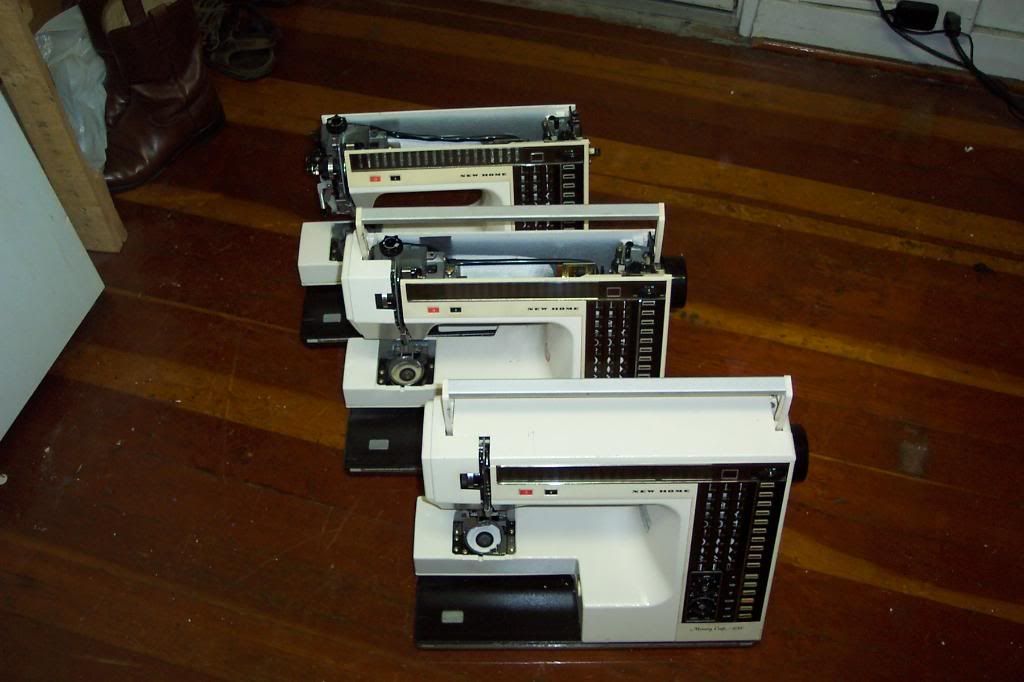
New Home Memory Craft 6000 (x3)
It's a testament to the sheer diversity of electronics and appliances that have been produced that I rarely take the same thing apart twice. And I don't just mean since I've started blogging about it, I mean since I started fifteen or so years ago. It happens, of course, as the previous entry about the Macintosh disk drives show and some of the vacuum cleaner entries mention, but it's really not that common. And finding multiples of the same thing at the same time is even rarer.
And yet here we are, with three of the same type of sewing machine all grabbed on the same night. Not one or two, but three. My completely uninformed guess is that a local tailor liquidated, and the local sew/vac place bought up their machines, then tossed the junkers.
The three machines are in various states of completeness, so I decided to focus my photography on the most intact machine.
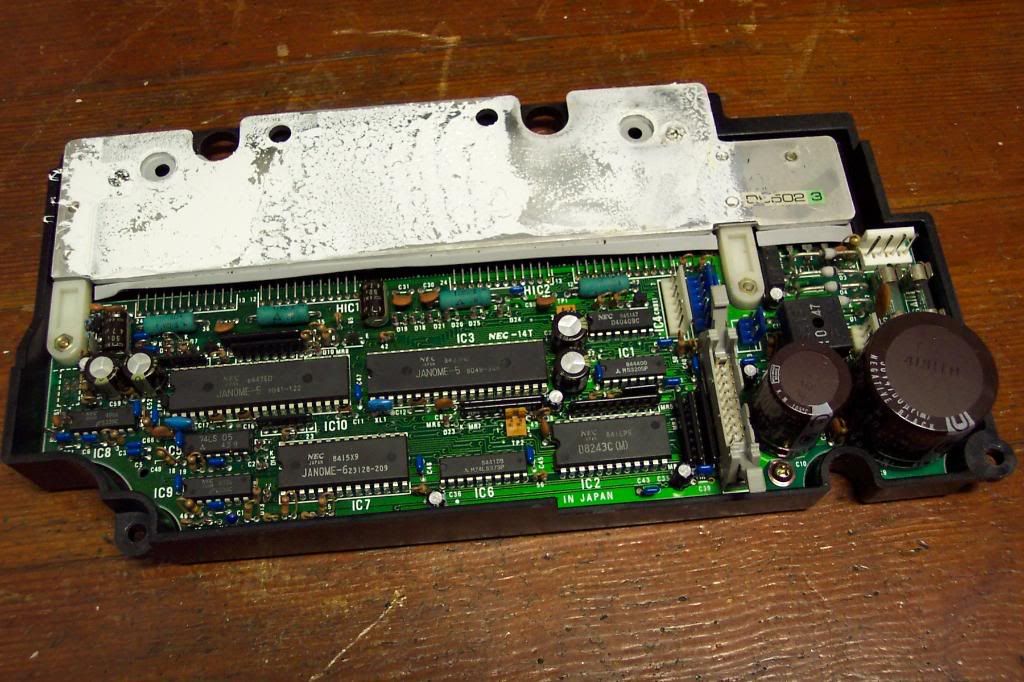
The mechanicals in the top portion were surprisingly simple and uncluttered, considering how many settings the machine has.
The back panel was one of those pieces that got removed by force, only to realize afterward that there was, in fact, another screw there that would have made the process easier.
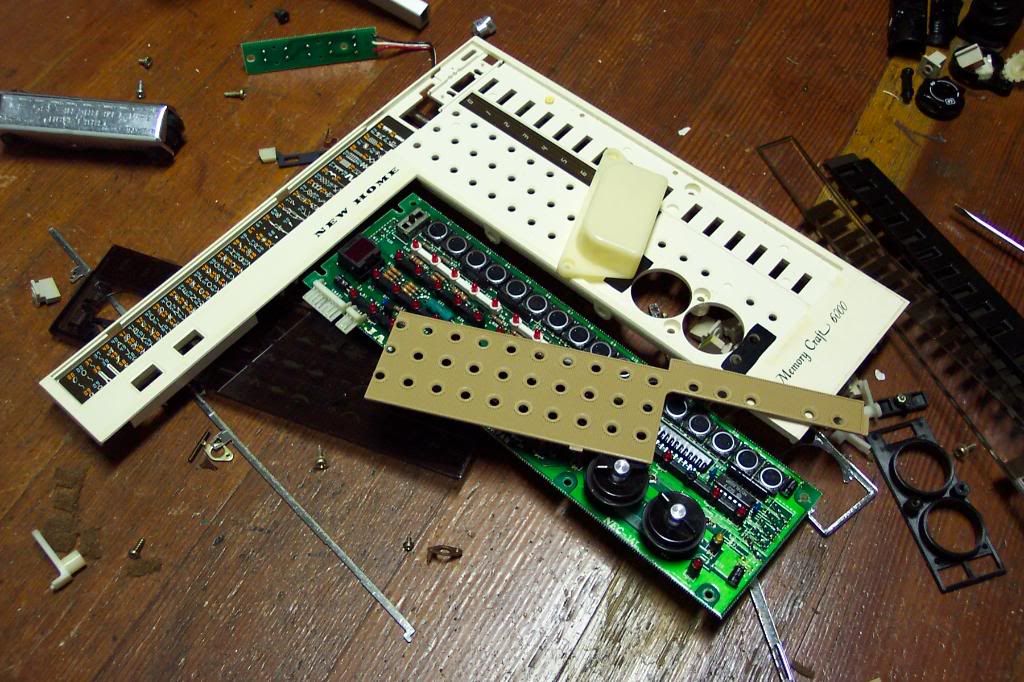
After the control panel was removed, the whole unit is pretty much stripped.
The control panel was pretty complex, as shown here by this pile of parts.
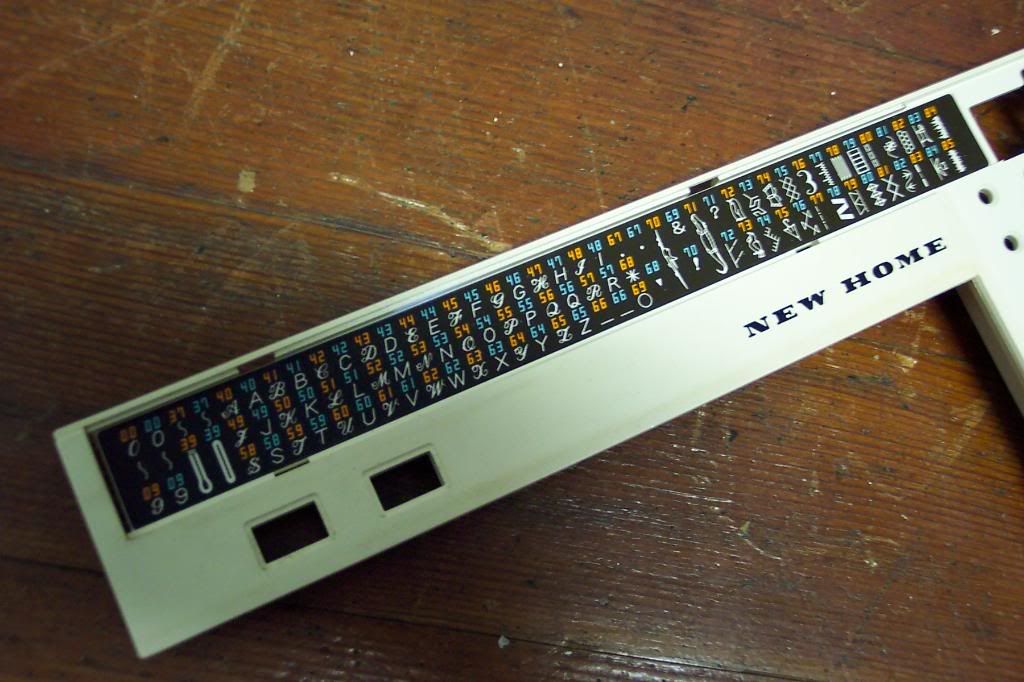
This sewing machine could make around 160 designs, though after letters and numbers, they start to get kind of arbitrary.
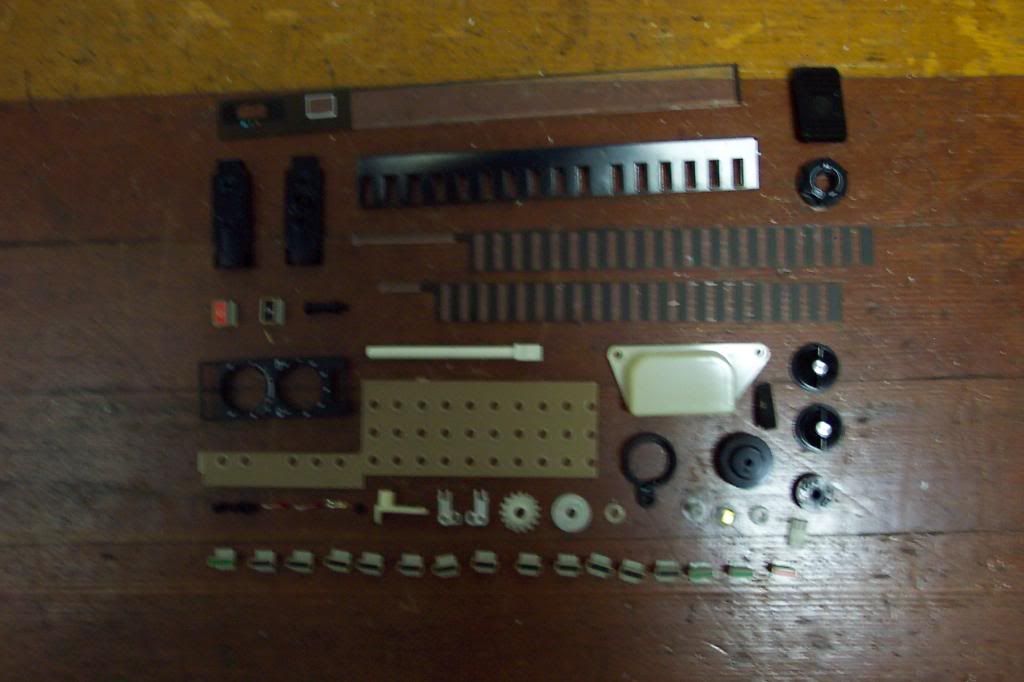
So this is the total number of parts I could pull out of just one machine.
...Or so I thought. After I had already tossed the first machine, I discovered on the second one that the bottom panel came off, and would yield a couple of additional parts.

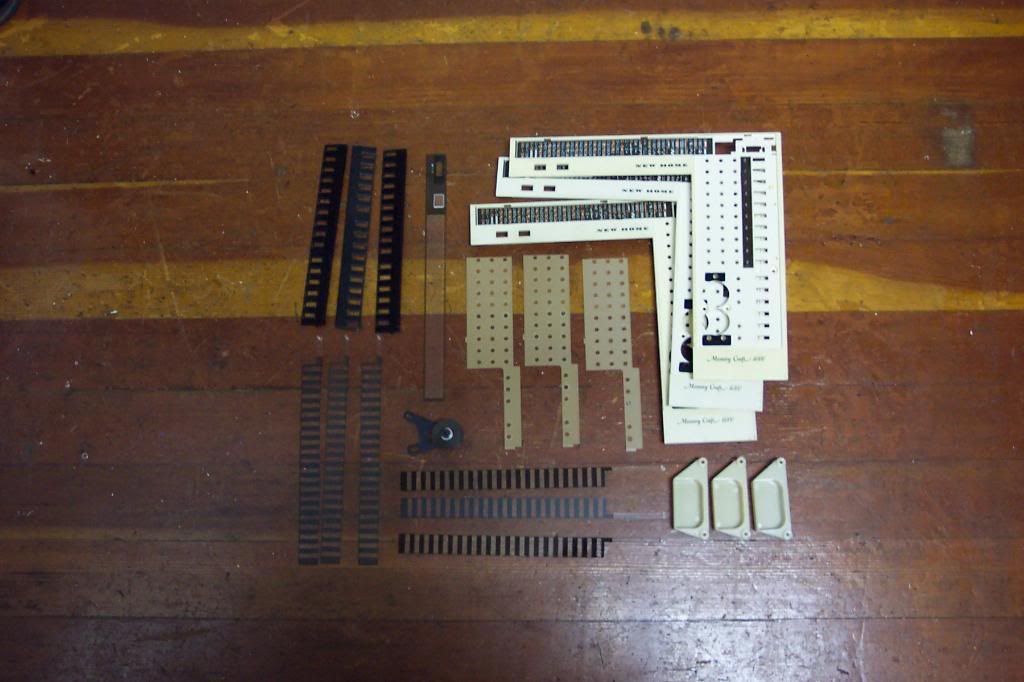
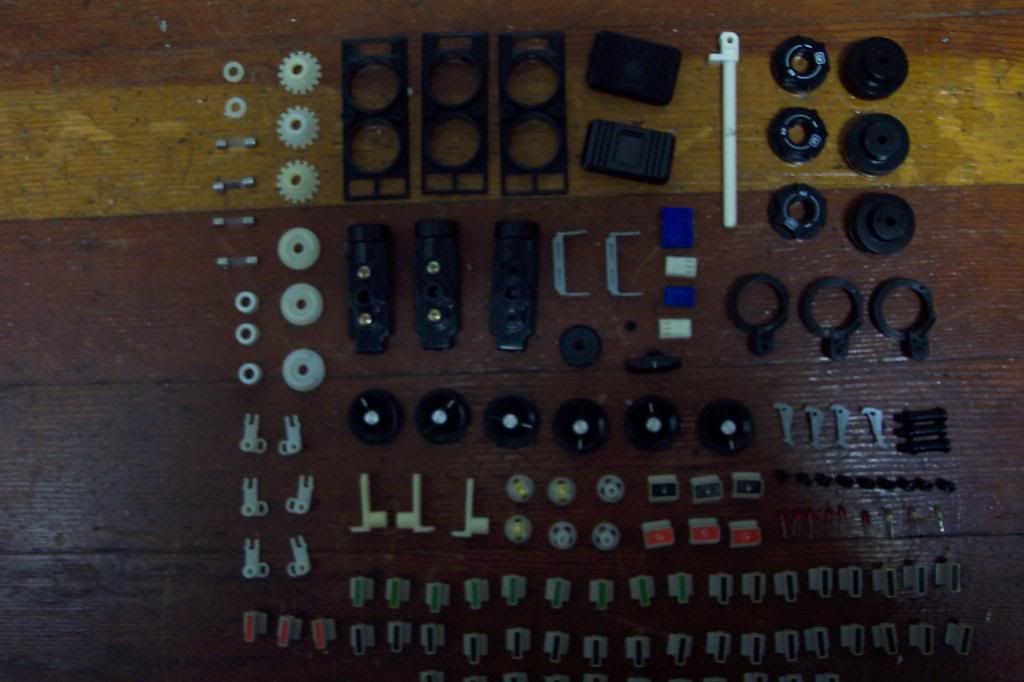
And here's the total selection of parts from all three machines. Pretty impressive, I think.

Subscribe to:
Posts (Atom)